Posted by sistema de las Víctimas on 06:20 with No comments
Sinkholes can be natural or man made. Natural sinkholes occur due to erosion or underground water. They start developing long time before it actually appears. The ground beneath our feet is not as much of a solid structure as we think it is. The ground is made from dirt, along with many rocks and minerals. There is water continually seeping in between the mud, rocks and minerals, as it makes its way down to the ground water reservoirs. As this happens, the water slowly erodes the rocks and minerals. Sometimes the flow of water increases to a point when it washes away the underground structure of the land. And when the structure becomes too weak to support the surface of the earth, it collapses and opens up a hole. This is how sinkholes are formed.
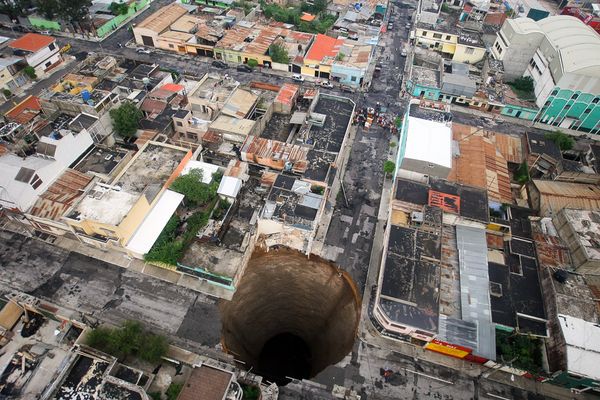
Humans are also responsible for the formation of sinkholes. Activities like drilling, mining, construction, broken water or drain pipes, improperly compacted soil after excavation work or even heavy traffic can result in small to large sinkholes. Water from broken pipe can penetrate through mud and rocks and erode the ground underneath and cause sinkholes. Sometimes, heavy weight on soft soil can result in collapse of ground, resulting in a sinkhole. Sinkholes can also form when the land surface is changed.
Areas that have a bedrock made of limestone, salt deposits or carbonate rock are most susceptible to erosion and the formation of such holes. These rocks tend to erode as acidic water passes through them. When rainwater passes through decaying plant debris, it tend to become more acidic. Over a period of years, overlying sediments collapse and a sinkhole develops. Sometimes the holes are small, measuring a few feet wide and ten to fifteen feet deep. Others can be hundreds of miles wide and deep. However, all of them can be dangerous for those that get caught in them. There are three major kinds of sinkholes. Their formation is determined by the same geological processes, barring a few differences.
- See more here


.jpg)


0 comments:
Post a Comment